A Rare Piece of American Trailer History
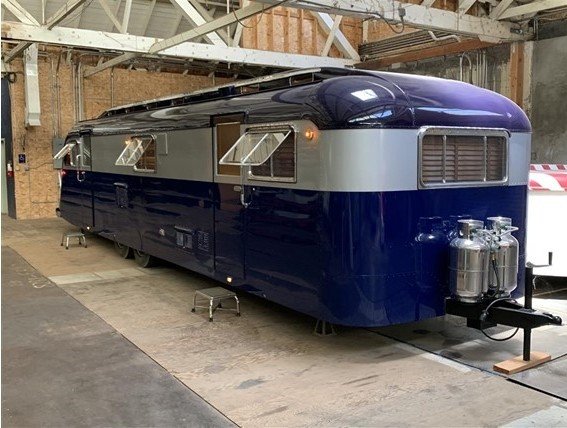
The Westcraft Capistrano was the longest and most ambitious model offered by the Westcraft Manufacturing Company of Burbank, California, during its brief but distinguished post-war production run.
Westcraft itself was introduced in 1932 by the George T. Hall Company of Los Angeles and revived after the Second World War. While the company also produced the more affordable Westwood line, the Westcraft models remained the top-of-the-line offering — aluminum-framed, heavy-gauge aluminum-skinned, and finished with the distinctive “Pullman” (clerestory) roof that gave them their unmistakable profile.
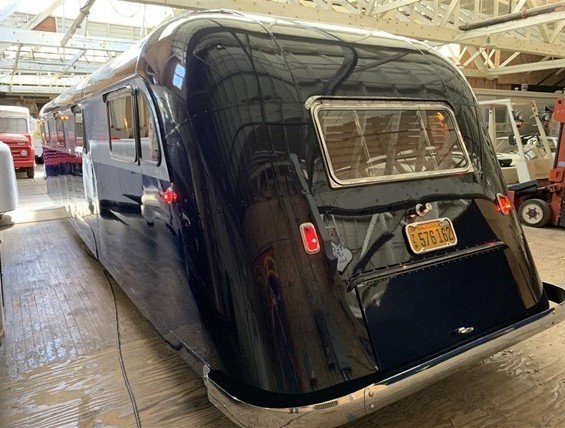
The Capistrano stood apart even within that exclusive range. At 33 feet, it was the longest model Westcraft ever built. Its Pullman roof carried seven windows on each side — fourteen in total — flooding the interior with light and providing a standing height of 6 feet 4 inches. Only a handful were produced; today, only one or two examples are known to exist. The second is reported to sit derelict in the desert, making this restored example effectively unique.
Eleven Years of Restoration
When Lucas Lackner acquired the trailer in 2008, it was in neglected condition. What followed was an eleven-year collaboration with vintage trailer specialist Steven Butcher and a team of California craftspeople. The reported investment exceeded $600,000. The goal was never a pure factory restoration. Instead, Lackner and Butcher set out to create something more opulent — an Art Deco–inspired interpretation that respected the original design while elevating every surface and system.
“I do have a deep love of mid-century design in general, but the Art Deco perfection of this particular trailer is beyond compare. There were only two Westwood Capistranos originally built, as far as we can research. The other is a relic in the desert now.”
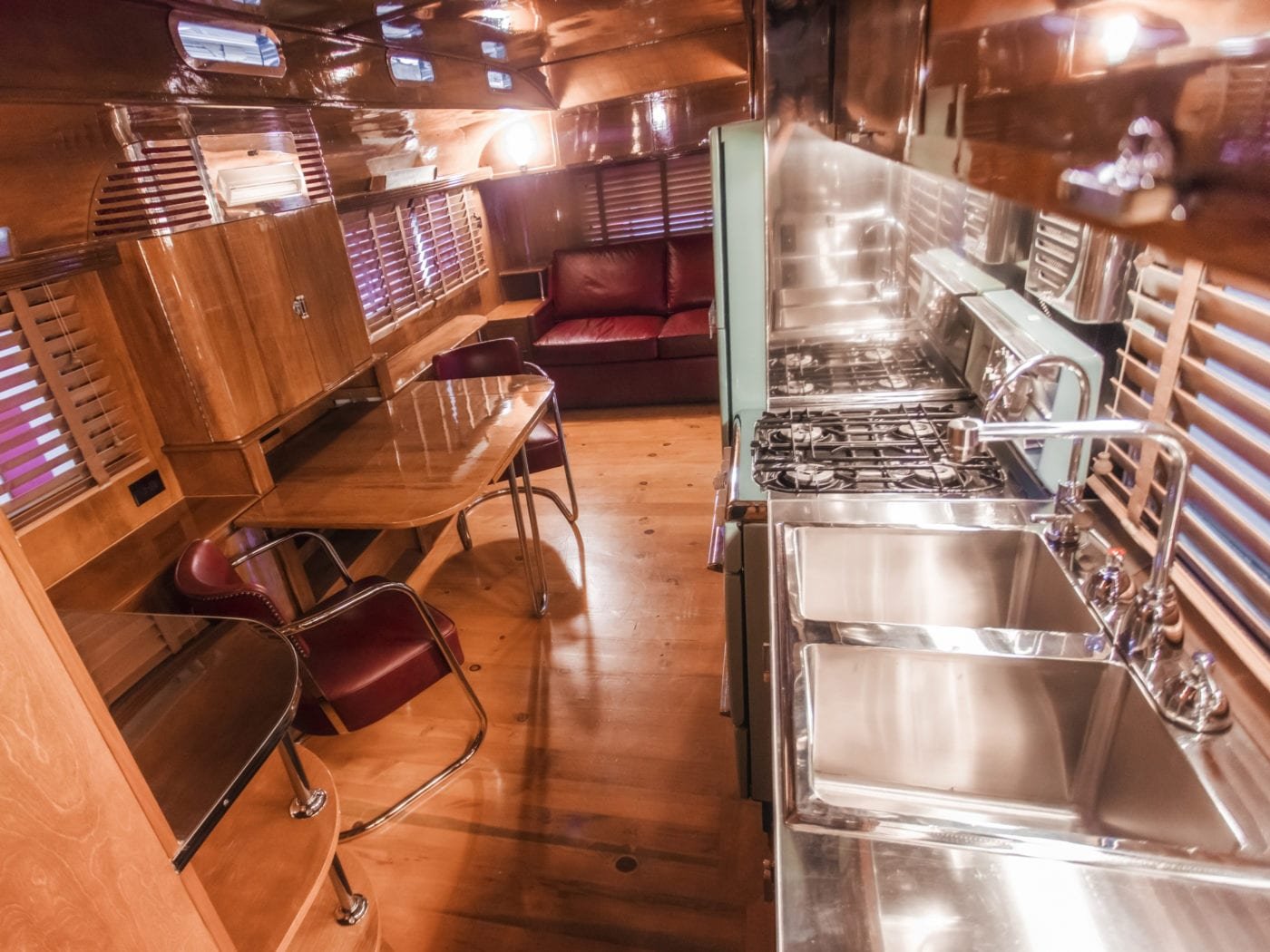
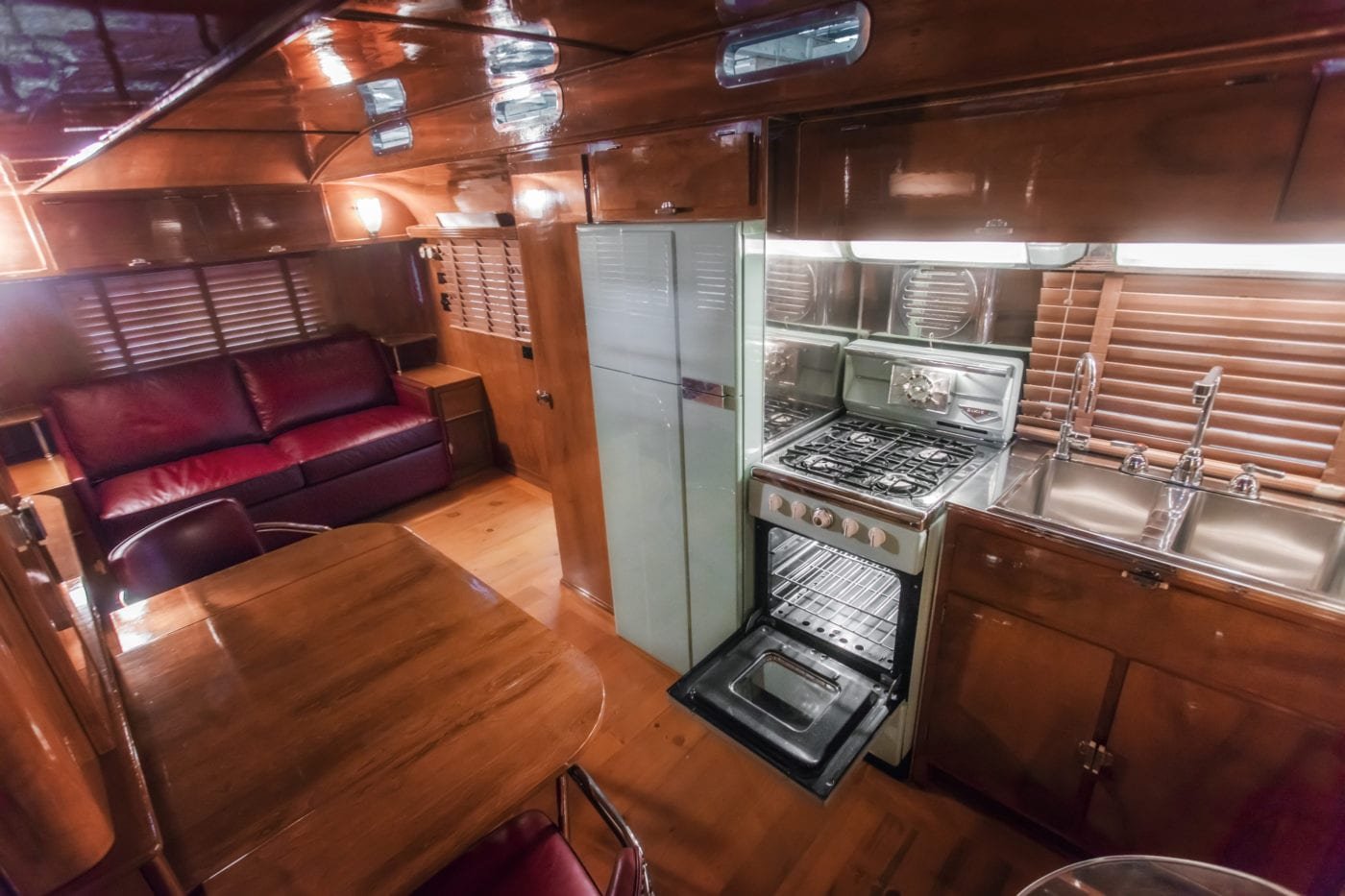
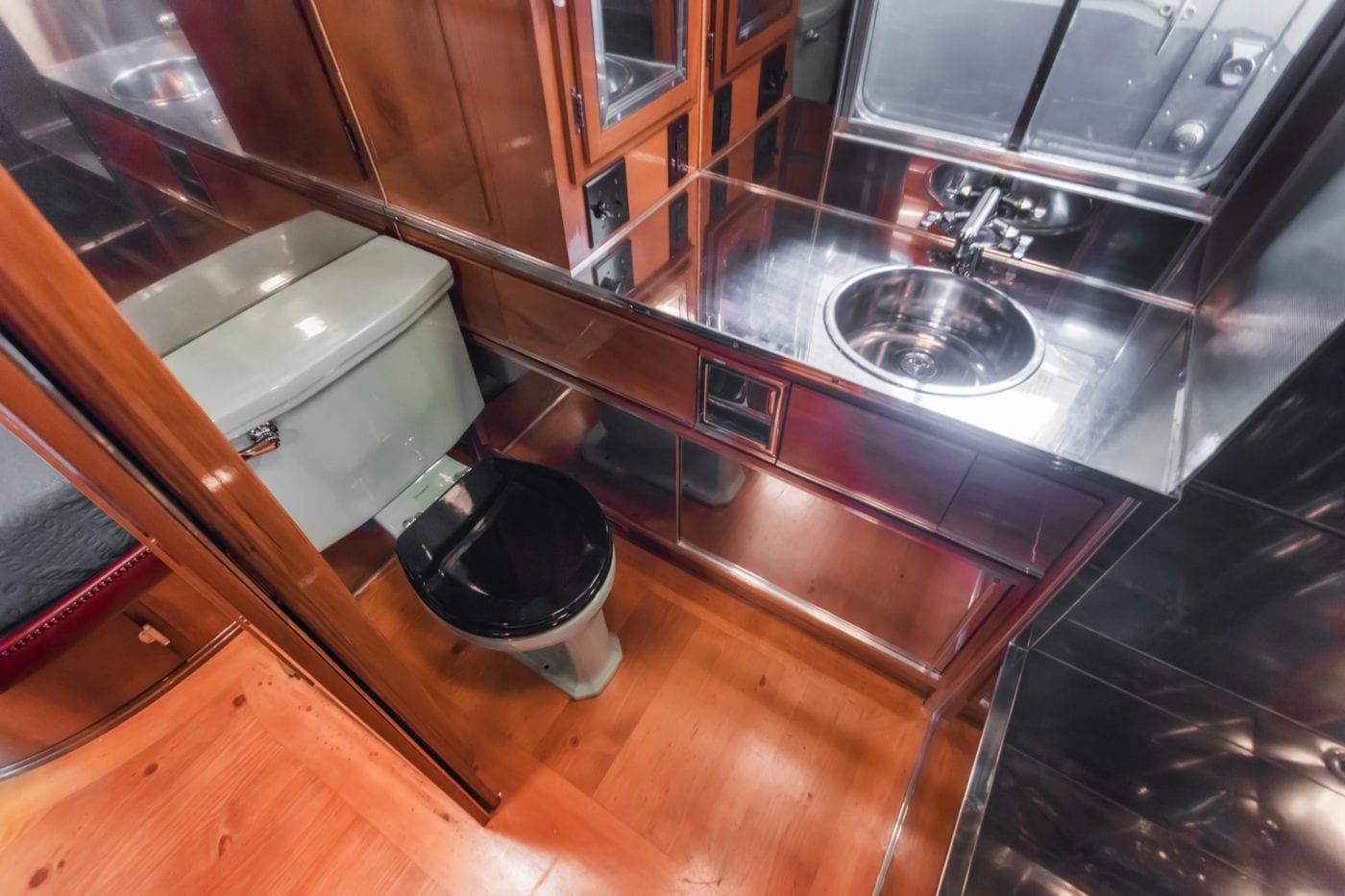
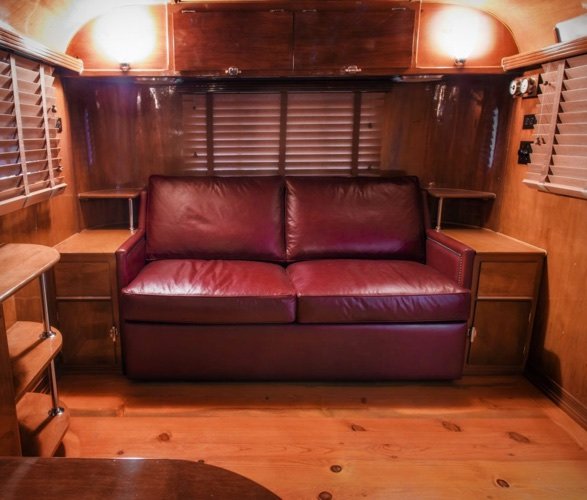
Approximately half of the interior birch paneling required replacement; new sheets were custom-fitted and finished with multiple coats of tinted varnish and faux grain to match the originals, then given four final coats of varnish with sanding between each layer. The old-growth pine floors were removed, refinished, and treated to a unique inlay pattern from stem to stern. Only about half the aluminum body had oxidized; new panels with complex compound curves were created using CNC water-jet technology. Heavy-gauge stainless steel surfaces were machined and individually fitted for the kitchen counters and bathroom (including the shower stall). Period faucets and fixtures were incorporated, bathroom panels interlock to prevent moisture penetration, and numerous details — shelf trim, speaker grilles, vents, drawer handles, faucet fittings, and the shower curtain rod — were custom milled from solid aluminum or water-jetted and polished.
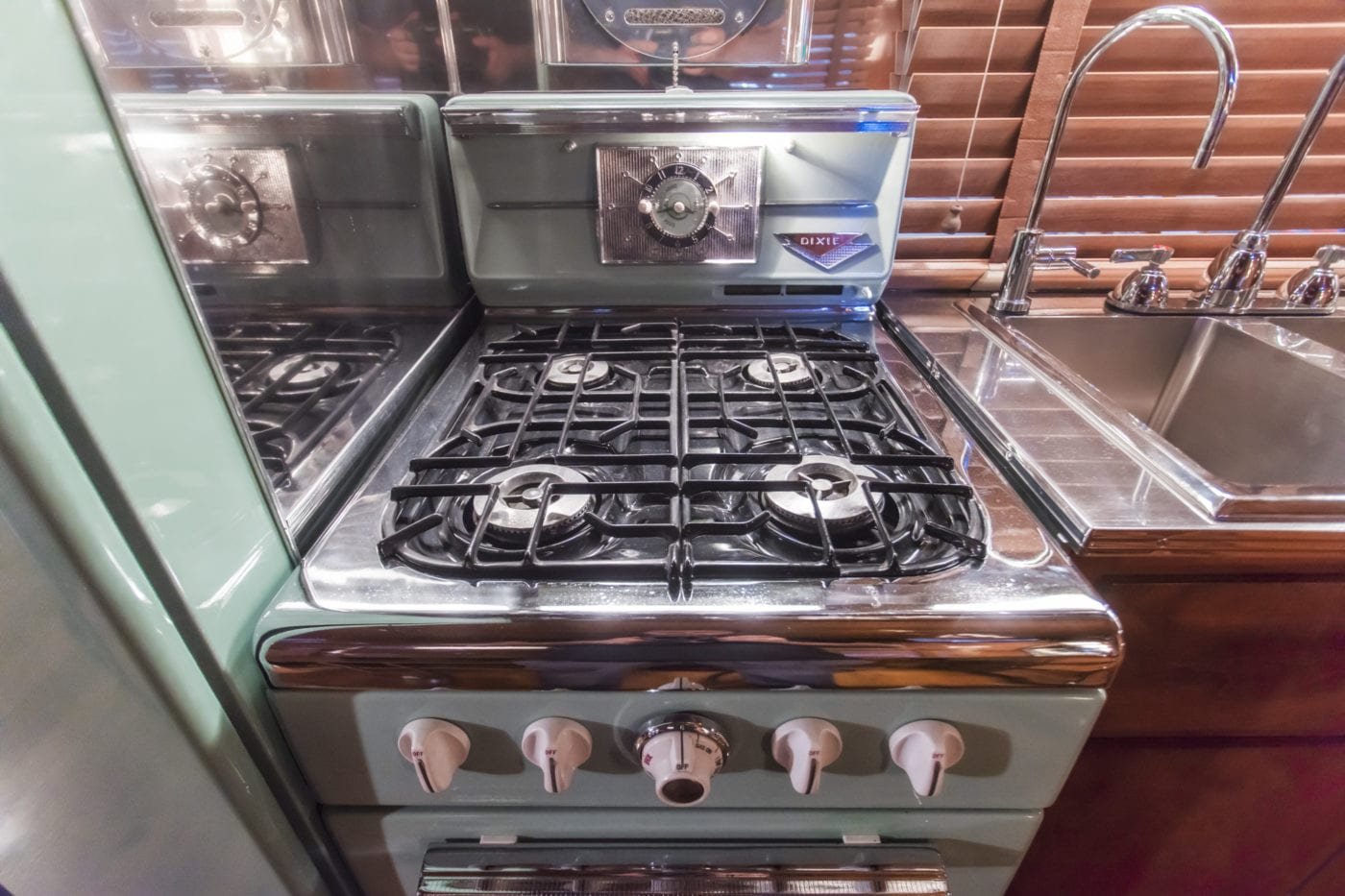
The undercarriage and chassis were cleaned, repaired, and reinforced. Electrical wiring was completely replaced with 20-amp Romex. Wheels, axles, brakes, and springs were refurbished. A new water heater was mounted to meet seismic codes, and a quiet, energy-efficient DuoTherm heating/AC system was installed with remote control. Two independent NAD audio systems drive NHT, Focal, and Sunfire speakers; each room has a Sony flatscreen with Bose soundbar. USB charging, ethernet, coaxial, and modern grounded outlets are concealed throughout. Additional period-correct elements include a fully restored late-1940s American Standard jade toilet (new internals, usable in either travel or park configuration) and a redone Dixie Permaview stove paired with a modern Norcold three-way refrigerator.
Rather than converting to LED lighting, original-style bulbs were sourced for the fixtures to preserve the warm period ambiance. Modern systems remain largely hidden behind period switchplates, custom curtains, and cabinetry so they never compete with the Art Deco aesthetic. The result is a trailer that feels like a 1950s vision of luxury while functioning as a comfortable modern dwelling.
A Living Archive
In August 2021 the Capistrano, by then known as “Calypso,” crossed the block at Bring a Trailer and sold for $630,000 — a figure that reflected both its rarity and the extraordinary quality of the restoration. Earlier private listings had carried asking prices approaching $975,000.
This trailer is not a Class A, B, or C motorhome. It is a park trailer of the highest order — a piece of mid-century American design that happens to roll. It belongs in any serious conversation about the golden age of travel trailers alongside the finest Airstreams and custom coaches of its era.
RVLeaseBusters is privileged to present the Capistrano Calypso as the flagship of our Heritage Collection. We thank Lucas Lackner for the care and vision that preserved this extraordinary machine, and we acknowledge the craftsmanship of Steven Butcher and the many specialists who contributed to its rebirth.
Photography & documentation provided with permission through Lucas Lackner. Professional photography by Pawel Litwinski and others is credited with gratitude for their contribution to the public record of this restoration.
Primary sources: Robb Report (“This Gorgeous, Hand-Restored Art Deco Trailer Is Straight Out of ‘Mad Men’”); duPont Registry News (“1950 Westcraft Capistrano Calypso For Sale,” Andrew Nabors); Bring a Trailer (Lot #52,910, August 2021); Vintage Camper Trailers Magazine; contemporary accounts of the restoration process.
This feature is presented for historical and educational purposes. Ownership and availability are subject to private arrangement.